

Ghee on an Empty Stomach: What Happens to Your Body in 30 Days
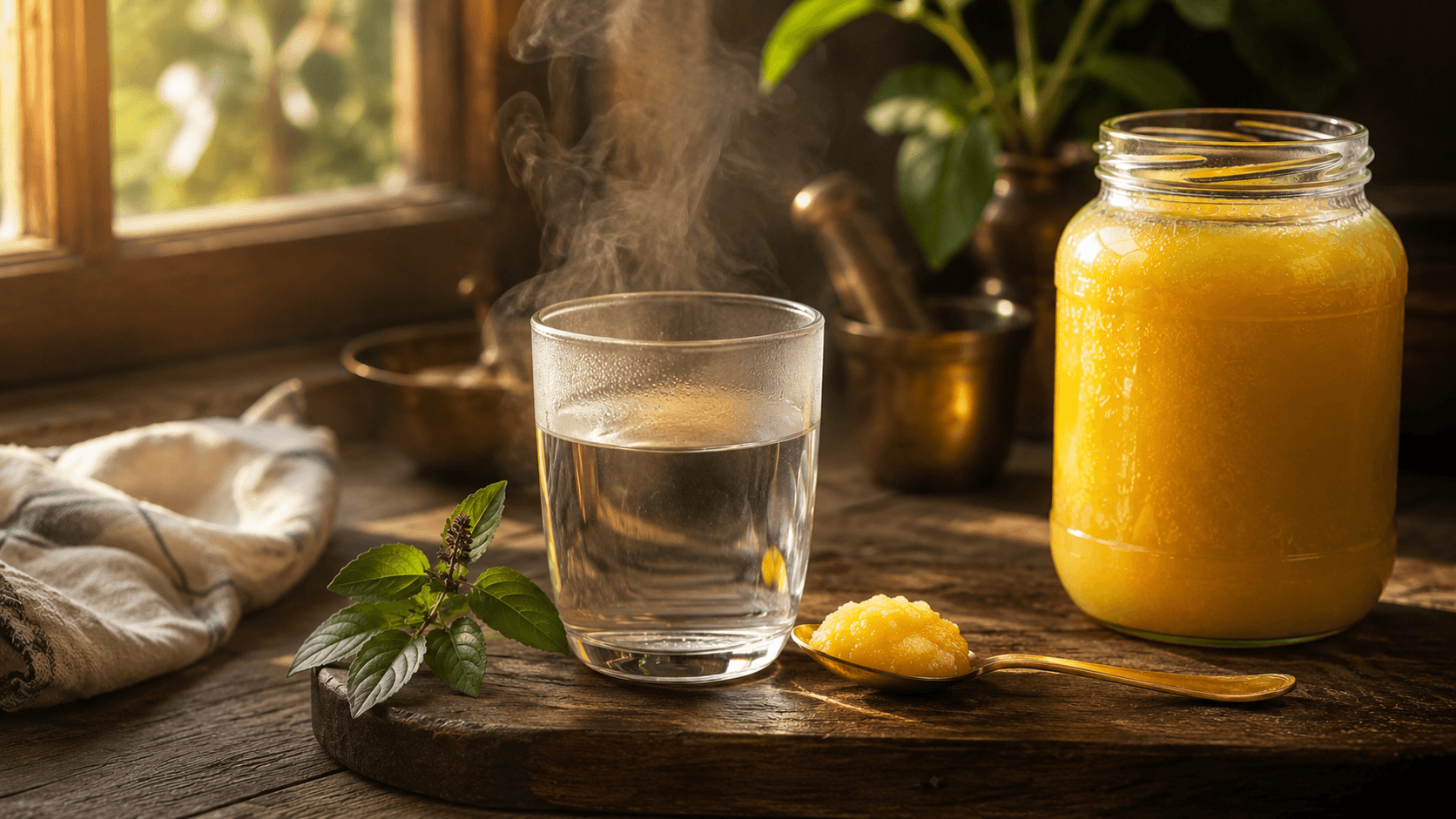
One teaspoon. A glass of warm water. Before anything else touches your stomach. It sounds far too simple to matter — yet taking pure ghee on an empty stomach is one of the oldest daily rituals in Ayurveda. If you enjoy the practice and tolerate ghee well, it can be a simple way to add dietary fat to your morning routine. Here is how to do it sensibly and what you may notice over 30 days.
The Quick Answer
Take 1 teaspoon (about 5 g) of pure ghee with a glass of warm water, 20–30 minutes before breakfast. Some people may notice changes in digestion or bowel regularity over the following days or weeks, but results vary. Ghee is calorie-dense, so the amount you use should fit within your overall diet. If your digestion is sensitive, begin with ½ teaspoon.
What You May Notice in 30 Days — A Week-by-Week Timeline
| Timeline | What You May Notice | Possible Reason |
|---|---|---|
| Days 1–3 | A gentle feeling of warmth or fullness after taking ghee | Ghee adds concentrated dietary fat and calories, which may increase satiety. |
| Week 1 | Some people may notice changes in bowel regularity or digestion | Dietary fat, hydration and the overall morning routine can influence bowel habits. |
| Week 2 | Potentially steadier morning satiety and fewer hunger pangs | Fat can slow digestion and may help you feel fuller for longer. |
| Week 3 | Skin and overall energy may feel different if your overall diet improves | Healthy dietary fat contributes to overall nutrition, while hydration and a balanced diet also affect skin health. |
| Week 4 | You may find the morning routine easier to maintain consistently | Benefits from a dietary habit are often linked to the overall routine rather than one ingredient alone. |
Results vary from person to person and depend on your overall diet, hydration, sleep, activity level and individual health. Ghee is a food, not a medicine.
How to Take Ghee on an Empty Stomach
1. Choose the right time
If you enjoy this routine, take it in the morning before breakfast. You can brush your teeth and drink water first. There is no medical requirement to take ghee immediately after waking, so choose a time that fits comfortably into your routine.
2. Start with the right quantity
Start with ½ teaspoon if you are new to the practice. If you tolerate it well, you can use around 1 teaspoon per day. More is not necessarily better because ghee is high in calories and saturated fat.
3. Use warm water if you prefer
You can mix the ghee into a glass of comfortably warm water or take the ghee separately and drink warm water afterward. There is no need to avoid cold water for medical reasons; choose whichever temperature feels comfortable for you.
4. Give your routine time
Do not expect dramatic changes after a few days. If you choose to continue the practice, evaluate how you feel over several weeks while also paying attention to your overall diet, hydration, sleep and activity.
6 Potential Benefits of Including Ghee in Your Diet
1. It provides concentrated energy
Ghee is almost entirely milk fat, making it a calorie-dense food. A small amount can add energy and fat to your breakfast routine without adding much volume.
2. It can contribute to dietary fat intake
Dietary fat is an important part of a balanced diet. Ghee can be one source of fat, although it is high in saturated fat and should be consumed in moderation.
3. It may help you feel fuller
Fat generally takes longer to digest than carbohydrates. Adding a small amount of ghee to your morning routine may therefore contribute to satiety and help some people feel fuller between meals.
4. It helps with absorption of fat-soluble nutrients
Vitamins A, D, E and K are fat-soluble, meaning dietary fat helps the body absorb them. However, you do not need to take a spoonful of ghee specifically for this purpose — a balanced meal containing healthy fats can also support absorption.
5. It can be part of a traditional wellness routine
Ghee has a long history in Indian cooking and Ayurveda. Traditional Ayurvedic descriptions associate ghee with nourishment and snehana. These traditional concepts can be meaningful as part of a wellness routine, but they should not be confused with established medical treatments.
6. It can make your morning routine more satisfying
For people who enjoy the taste and tolerate it well, a small amount of ghee can be incorporated into a consistent morning eating pattern. The broader quality of your diet matters much more than any single food.
Who Should Be Careful?
- High cholesterol, high triglycerides or heart disease — ghee is high in saturated fat. Discuss your overall saturated-fat intake with your doctor or dietitian.
- Gallstones or gallbladder problems — fatty foods can trigger symptoms in some people. Seek medical advice if you experience pain or digestive symptoms after eating fat.
- Active indigestion, nausea or diarrhoea — avoid adding extra fat until your digestive symptoms settle.
- Weight-management goals — one teaspoon of ghee provides roughly 45 calories. Include those calories in your overall daily intake rather than treating them as calorie-free.
- Pregnancy — ghee can be part of a balanced diet for many people, but individual nutritional needs vary. Follow your healthcare professional's advice.
- Milk allergy — ghee is a dairy product and may contain trace milk proteins. People with a diagnosed milk allergy should not assume that ghee is safe.
Why the Quality of Your Ghee Matters
If you choose to take ghee regularly, look for a product with clear ingredients, reliable sourcing and appropriate food-safety certification. Not every product labelled as ghee is made using the same process.
Traditional Bilona ghee is made by setting milk into curd, churning the curd to obtain makkhan (butter), and then simmering the butter to separate the milk solids from the fat. If you are unsure about your current ghee, check it against our guide on the signs of fake ghee.
NavPrana's Desi Cow A2 Bilona Ghee and Buffalo A2 Bilona Ghee are options for people who prefer traditionally prepared bilona ghee.
Frequently Asked Questions
Does ghee on an empty stomach cause weight gain?
Ghee can contribute to weight gain if it increases your total calorie intake above your body's needs. One teaspoon contains roughly 45 calories, so it is important to include it in your overall daily intake. Ghee should not be considered a weight-loss food by itself. See our guide on how much ghee per day is safe.
Should I take ghee with warm water or plain?
Either is fine. Warm water is a traditional option and may simply be more comfortable for some people. There is no strong evidence that warm water provides a special digestive benefit compared with drinking water at another comfortable temperature.
Is morning or night better for ghee?
There is no universally "best" time to consume ghee. Morning ghee can be part of a breakfast routine, while ghee with warm milk at night can be a nourishing bedtime drink for people who tolerate dairy. Choose the timing that fits your diet and digestion.
Can I do this every day?
Many healthy adults can include a small amount of ghee in their daily diet. However, there is no requirement to consume ghee every day, and the appropriate amount depends on your overall calorie and saturated-fat intake.
Cow ghee or buffalo ghee for the empty-stomach ritual?
Both can be used. Cow and buffalo ghee differ in flavour, texture and nutritional composition. Choose according to your preferences and dietary needs. Read our cow ghee vs buffalo ghee comparison.
Start Your 30-Day Routine
If you enjoy ghee and tolerate it well, starting with ½ to 1 teaspoon in the morning is a simple way to include it in your daily diet. Keep the rest of your diet balanced, stay hydrated and pay attention to how your body responds.
- Lighter option for mornings → Desi Cow A2 Bilona Ghee (500 ml)
- Richer flavour and texture → Buffalo A2 Bilona Ghee (500 ml)
Every jar is hand-churned in small batches from grass-fed A2 milk in the Chambal valley and FSSAI certified. Shop the collection → Free shipping on orders above ₹999.
This article is for general wellness information only and is not medical advice. If you have a medical condition, take medication, are pregnant, or have specific dietary restrictions, consult your doctor or a qualified dietitian before making significant dietary changes.