


Pure A2 Desi Cow & Buffalo Bilona Ghee
Hand-churned the traditional bilona way in the Chambal valley of Madhya Pradesh. Grass-fed, FSSAI certified, nothing added.
This Diwali, make it with real bilona ghee
Mithai, diyas and the festive thali — the season runs on ghee. Ours is hand-churned from curd in the Chambal valley, with nothing added.
- For Diwali sweets
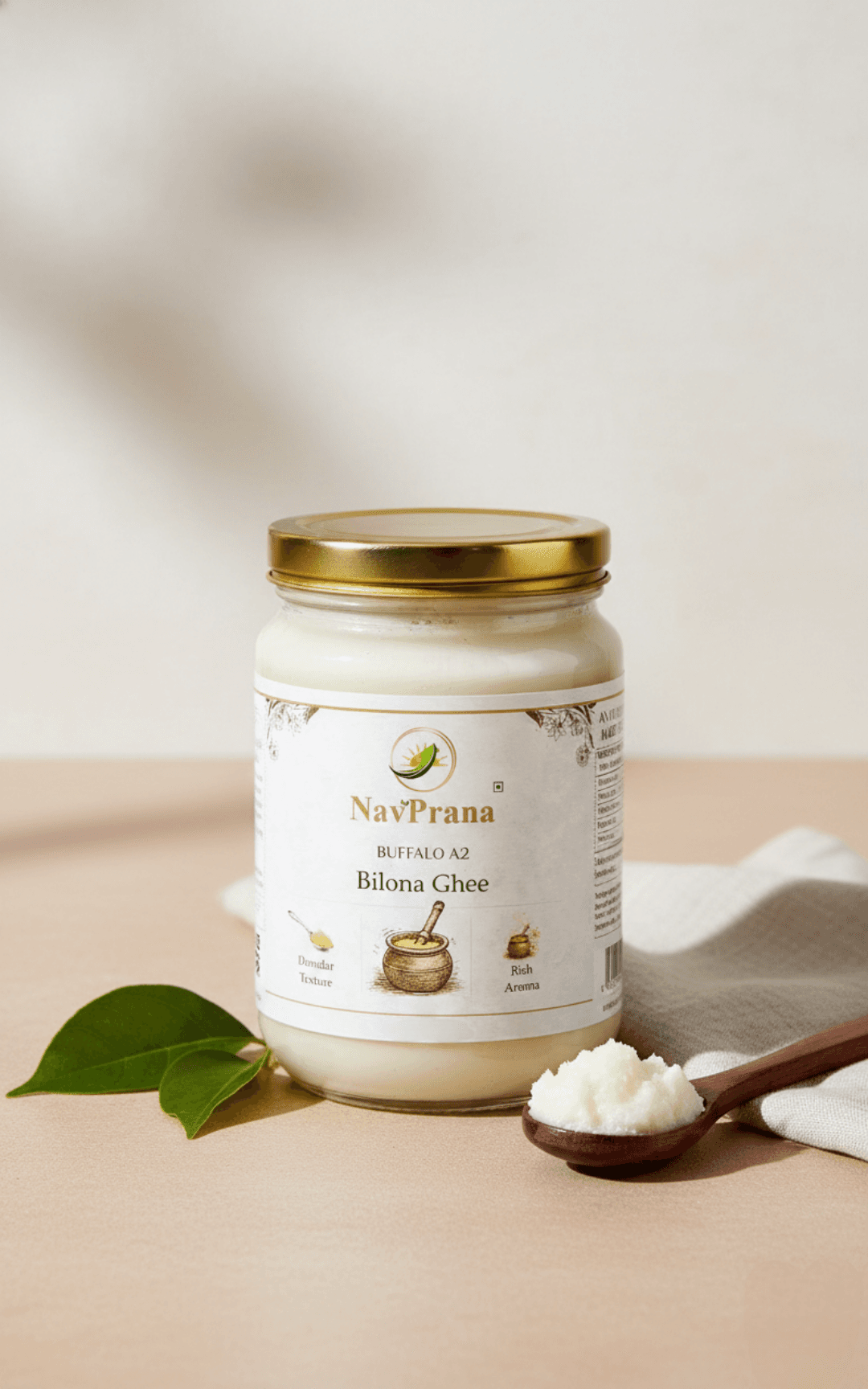
A2 Buffalo Bilona Ghee
Dense and rich, the traditional choice for besan laddoo, halwa, barfi and anything fried. Sweets made in real ghee keep their aroma for days.
Shop now - For puja and diyas
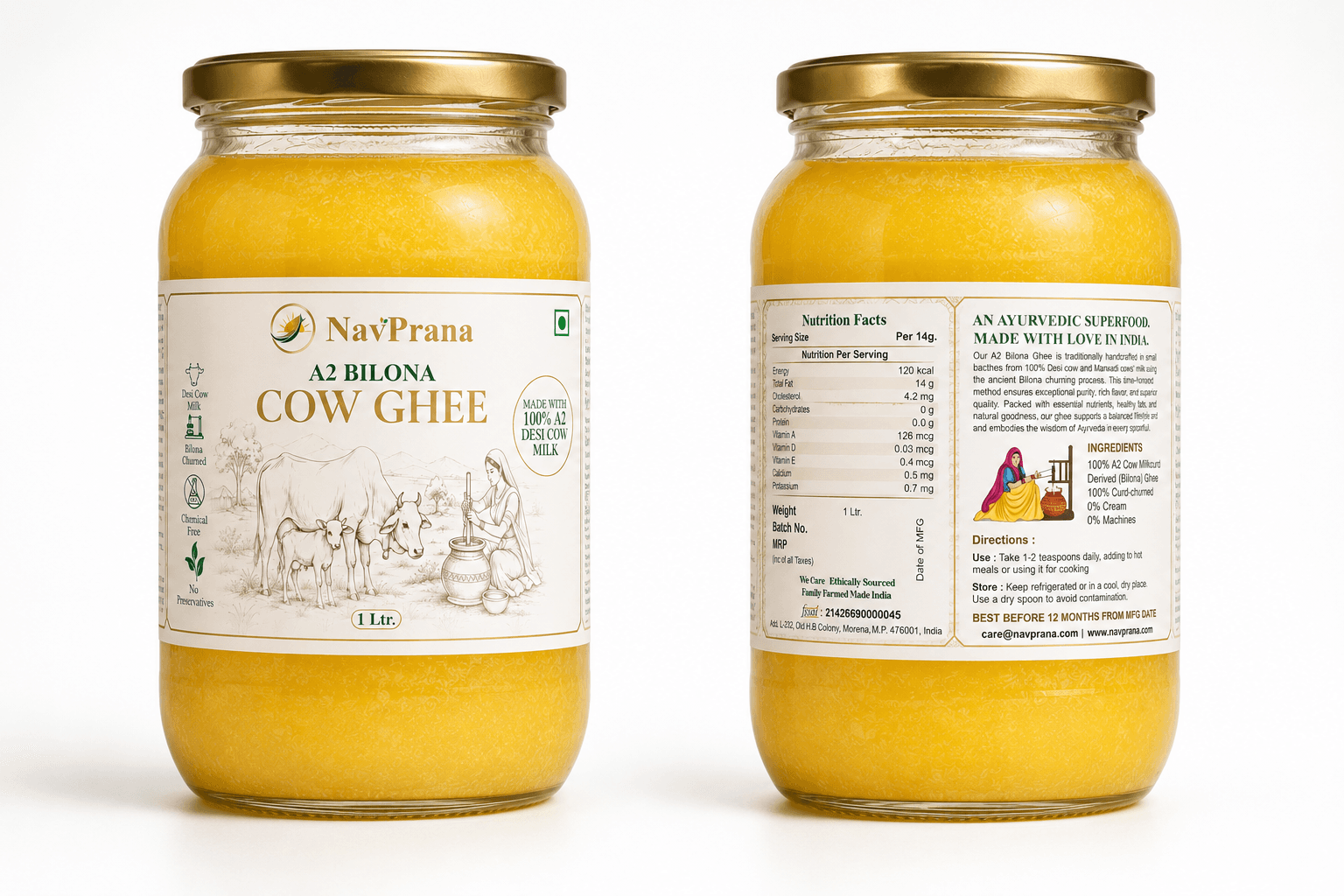
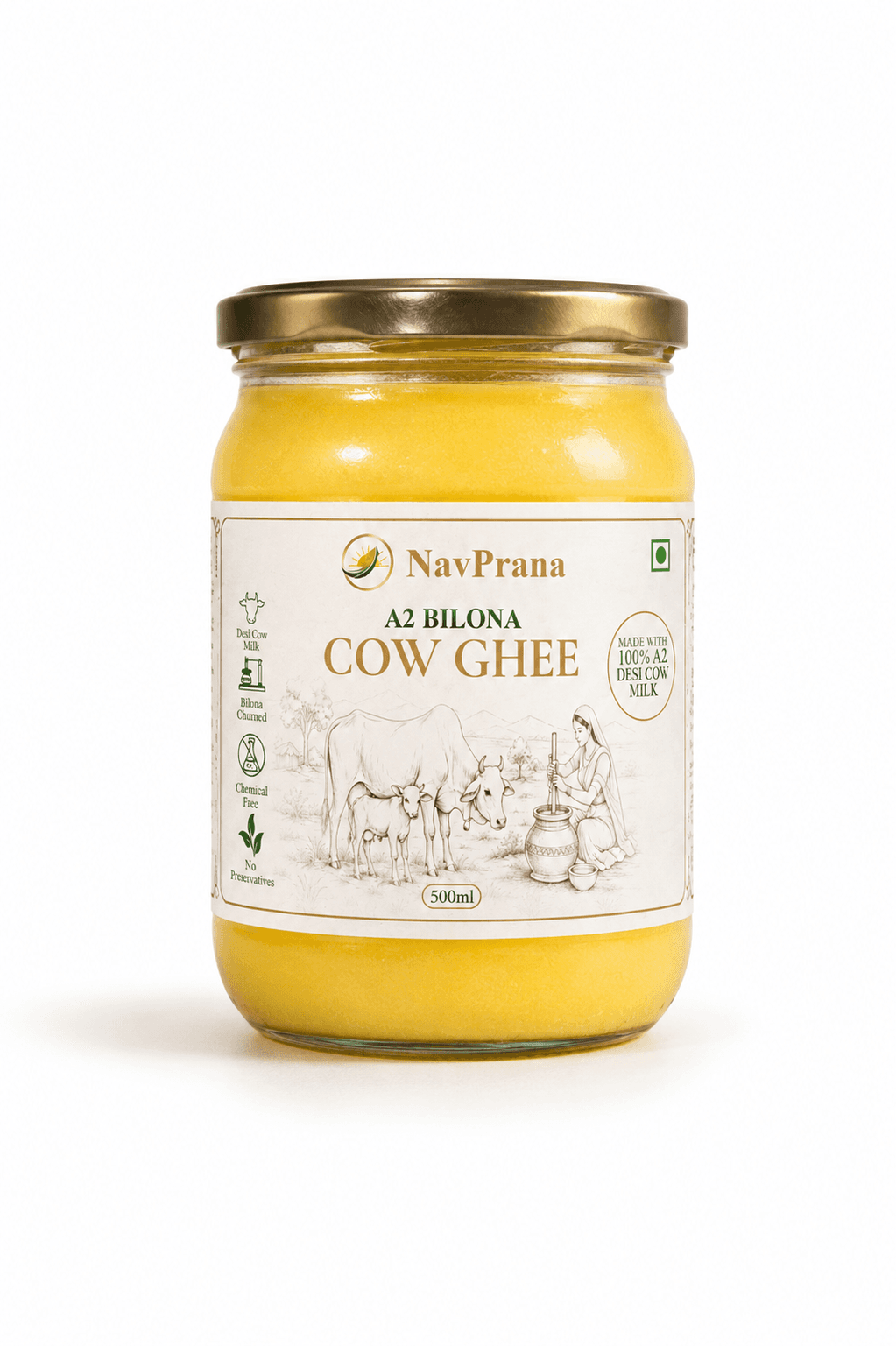
A2 Desi Cow Bilona Ghee
Golden, light and fragrant. Desi cow ghee is what families have traditionally lit diyas and offered at puja with, and it is the one for the festive thali too.
Shop now - For gifting
500 ml & 1 litre glass jars
A jar of hand-churned bilona ghee is a gift that actually gets used — in every meal of the season. Send one home, or to family who are far away.
Shop now
🪔 Order by 1 November for delivery before Diwali in most of India.
Pure Desi Cow & Buffalo Bilona Ghee
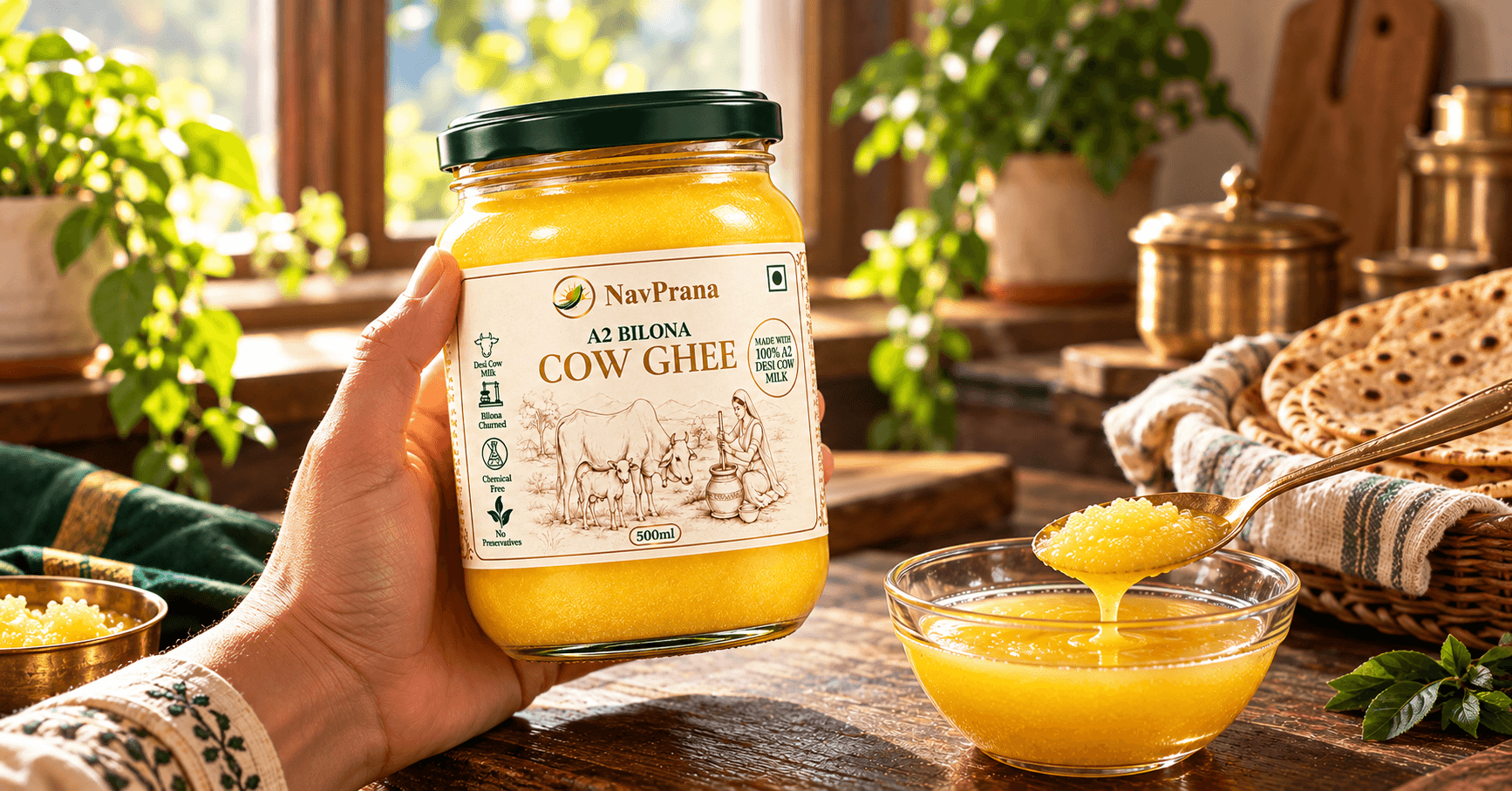
A2 desi cow ghee for light, everyday cooking, and A2 buffalo ghee for richer, denser nutrition — both hand-churned using the traditional bilona method, with nothing added.
Free Shipping
On orders above ₹599
Quality Assured
Lab tested pure desi ghee
Verified Reviews
From real customers
Bilona Method
Traditional hand-churned
FSSAI Certified
Government approved
100% Natural
Grass-fed cow & buffalo
Cow ghee or buffalo ghee?
Neither is better in general — they behave differently in the pan. Plenty of households keep both.
 The everyday one
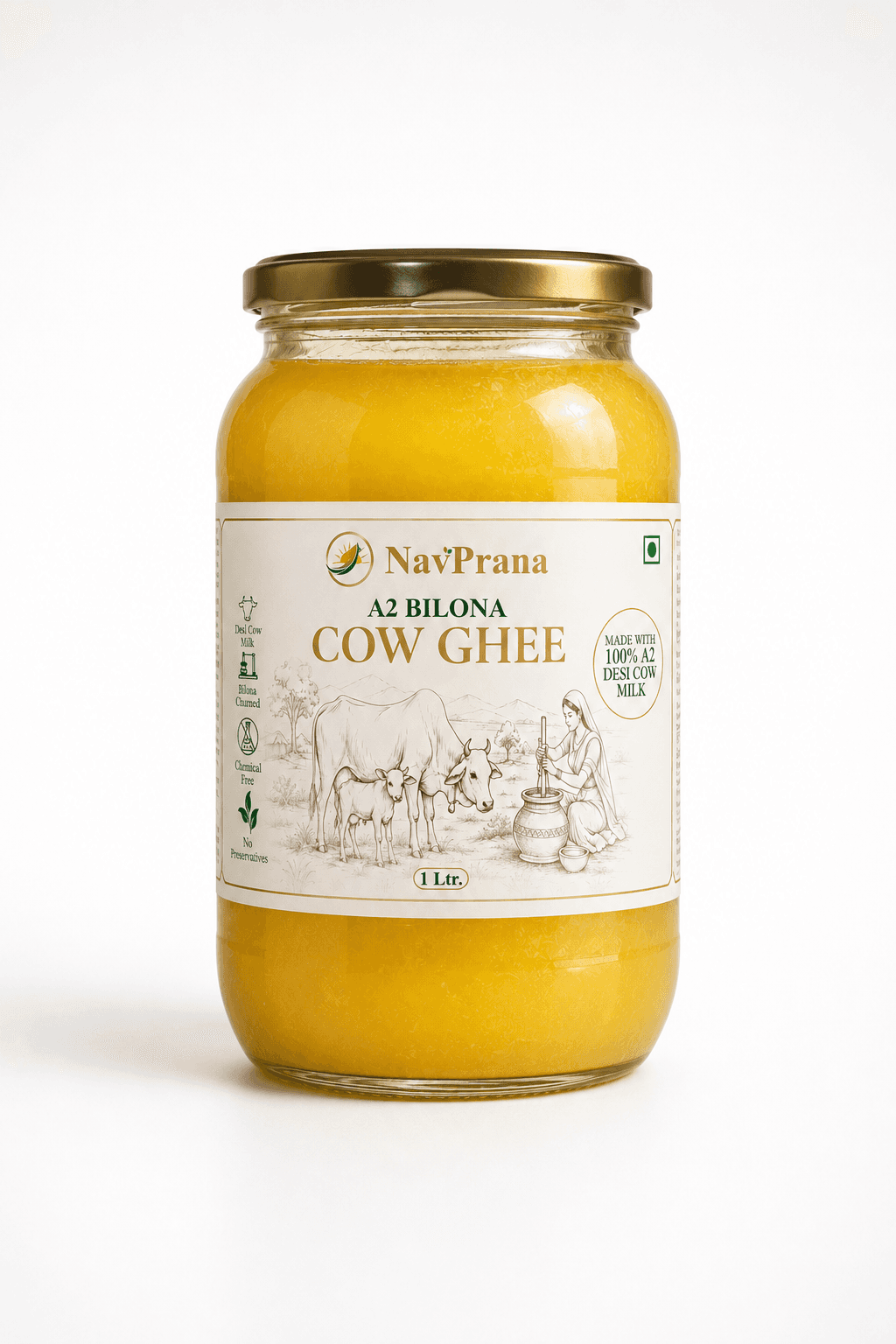
A2 Desi Cow Ghee
₹799 – ₹1599Lighter, deep golden, easier to digest. This is the jar that sits by the stove and goes into everything.
Pick this if
- Daily cooking — dal, roti, khichdi, rice
- Lighter on the stomach; suits small children
- Ayurvedic and ritual use
- If you are buying ghee for the first time
 The richer one
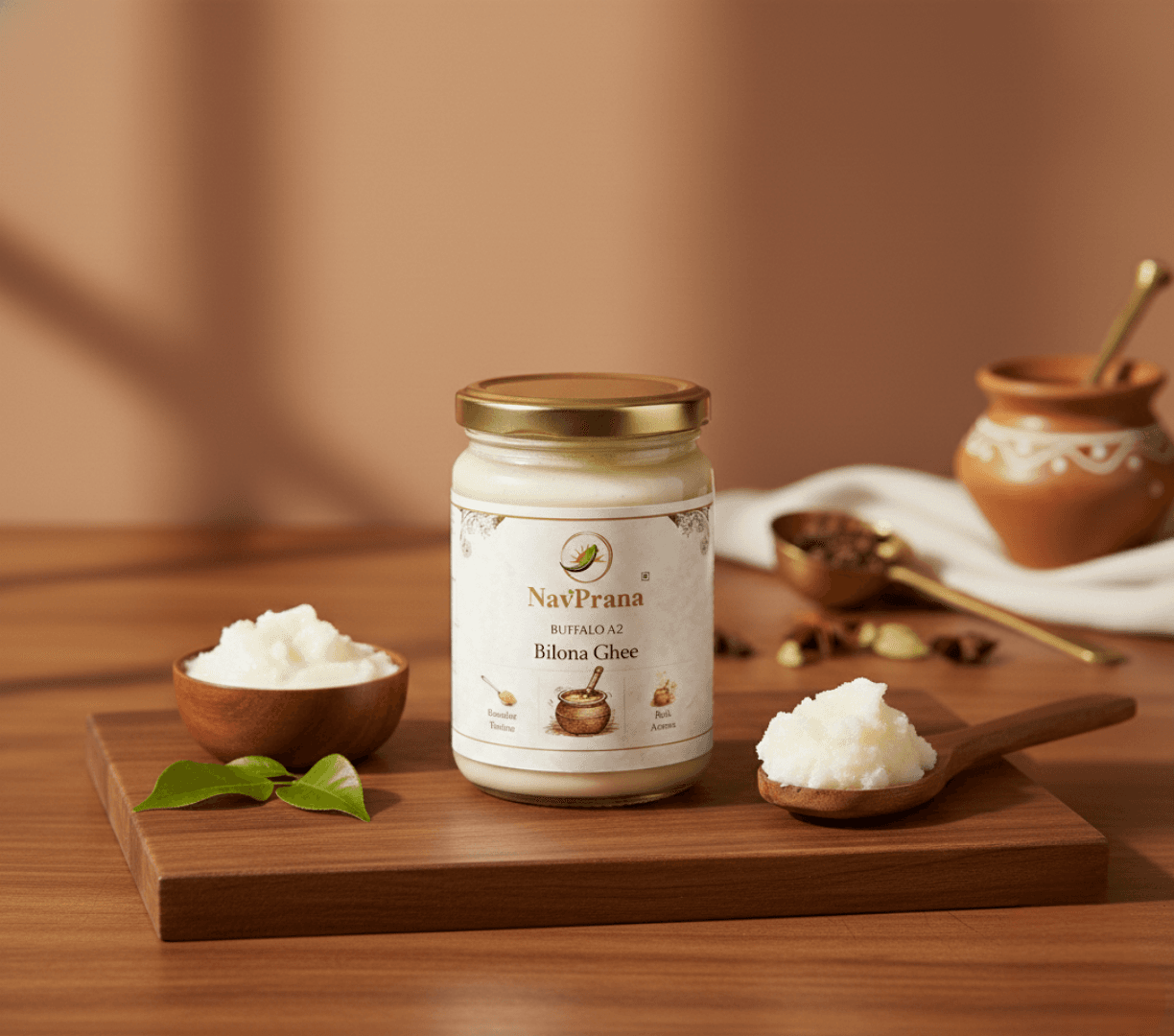
A2 Buffalo Ghee
₹699 – ₹1399Denser, pale ivory, higher in fat and minerals. More sustaining, and it holds up to heavy cooking.
Pick this if
- Sweets, halwa, laddoo, deep frying
- Higher in calcium and phosphorus
- Cold months and physically active days
- If you already cook with ghee regularly
Still deciding? Read the full comparison.
Why it costs what it costs
Most ghee is made by spinning cream out of milk in a centrifuge — fast and cheap. Bilona takes the long road, and there is no shortcut in it.
- 01
Milked twice a day
From indigenous cows and native breed buffaloes on open grazing, not stall-fed on concentrate. Milk reaches our unit in Morena within hours.
- 02
Cultured overnight
The whole milk — not separated cream — is set into curd the same evening with a live starter. Curd from day-old milk never churns the same way.
- 03
Churned by hand
Next morning the curd is churned until the butter separates and rises. This is the bilona step, and it is the one every industrial process skips.
- 04
Simmered slowly
Only that butter goes into the pan, over a low flame, until the water cooks off and the milk solids settle golden at the bottom.
- 05
Tested and filled
Each batch is filtered, lab tested, and filled into glass. Nothing added at any stage — no palm oil, no vanaspati, no colour, no preservative.
What's actually in the jar
Ghee is a food, not a supplement. Here is what A2 bilona ghee — cow or buffalo — is made of, and how ours is made.
Fat-Soluble Vitamins
Ghee naturally carries vitamins A, D, E and K — the fat-soluble ones your body absorbs better when they come with fat.
Slow-Burning Fat
Ghee is almost entirely fat, which digests slower than carbohydrate — which is why a spoon in dal keeps a meal satisfying for longer.
Butyric Acid
Ghee is one of the richest natural food sources of butyric acid, a short-chain fatty acid long valued in Indian kitchens and Ayurveda.
One Ingredient
No palm oil, no vanaspati, no colour, no preservative, no synthetic flavour. Just A2 milk — cow or buffalo — and nothing else.
Hand-Churned Bilona
Cultured into curd overnight, churned by hand, then slow-simmered. Roughly 30 litres of milk go into a single litre of ghee.
Grass-Fed, Open Grazing
From indigenous cows and native breed buffaloes on open grazing along the Chambal, not stall-fed on concentrate.
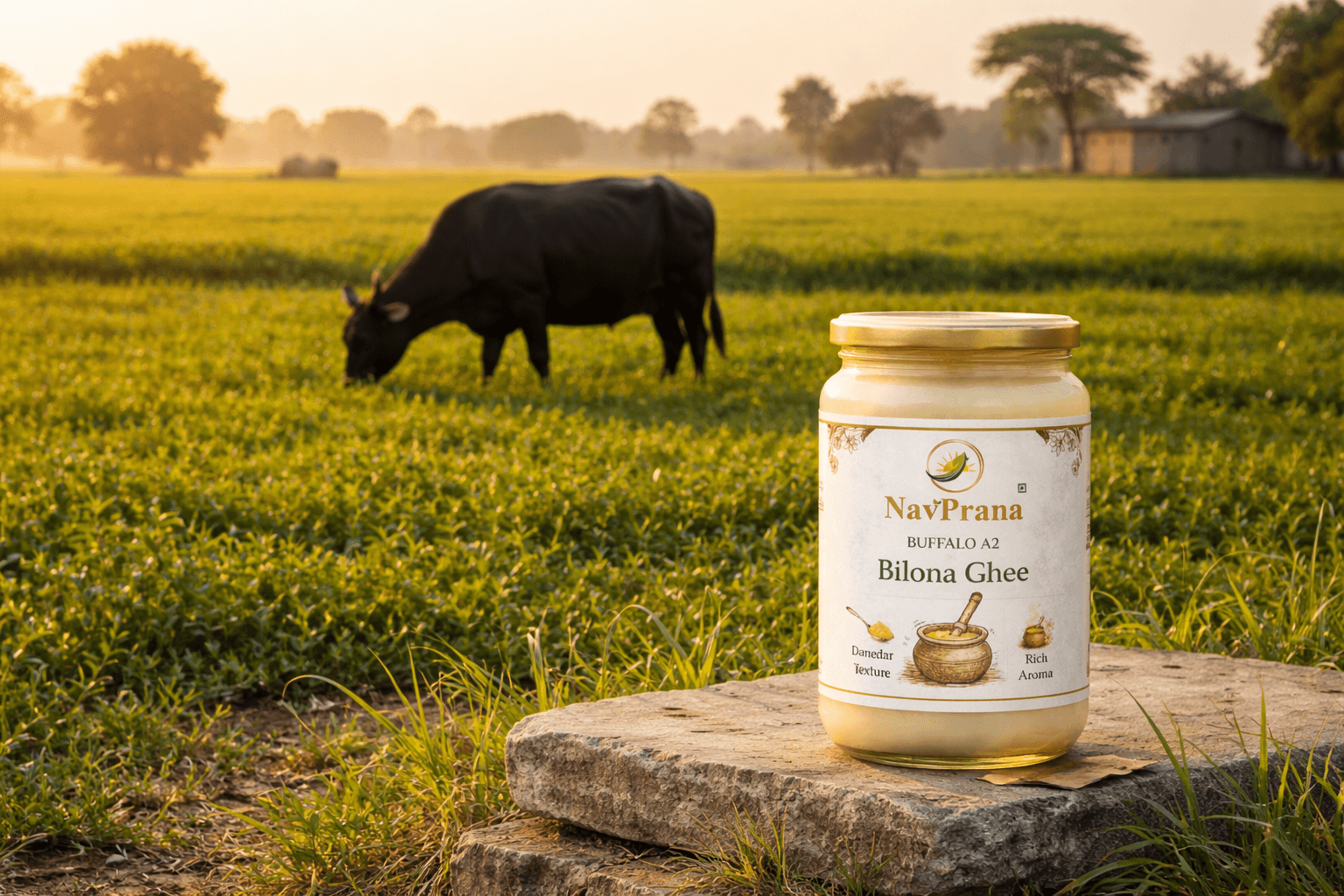
From the Chambal valley to your kitchen
Small batches, open grazing, and a process that has not changed in generations.
How much is enough?
Two to three teaspoons a day across meals is roughly what traditional Indian cooking already uses. Ghee is calorie dense, so it is not something to add on top of an existing diet without accounting for it.
Not medical advice — ask a doctor or dietitian about your own diet.
What we can actually prove
FSSAI certified
Every batch is produced under our FSSAI licence.
Lab tested per batch
Purity and adulteration testing on every batch — reports on request.
Made in Morena, MP
L-232, Old H.B Colony, Morena, Madhya Pradesh 476001. Not a white-label brand.
About usStraight answers about ghee
 Food Wisdom6 min
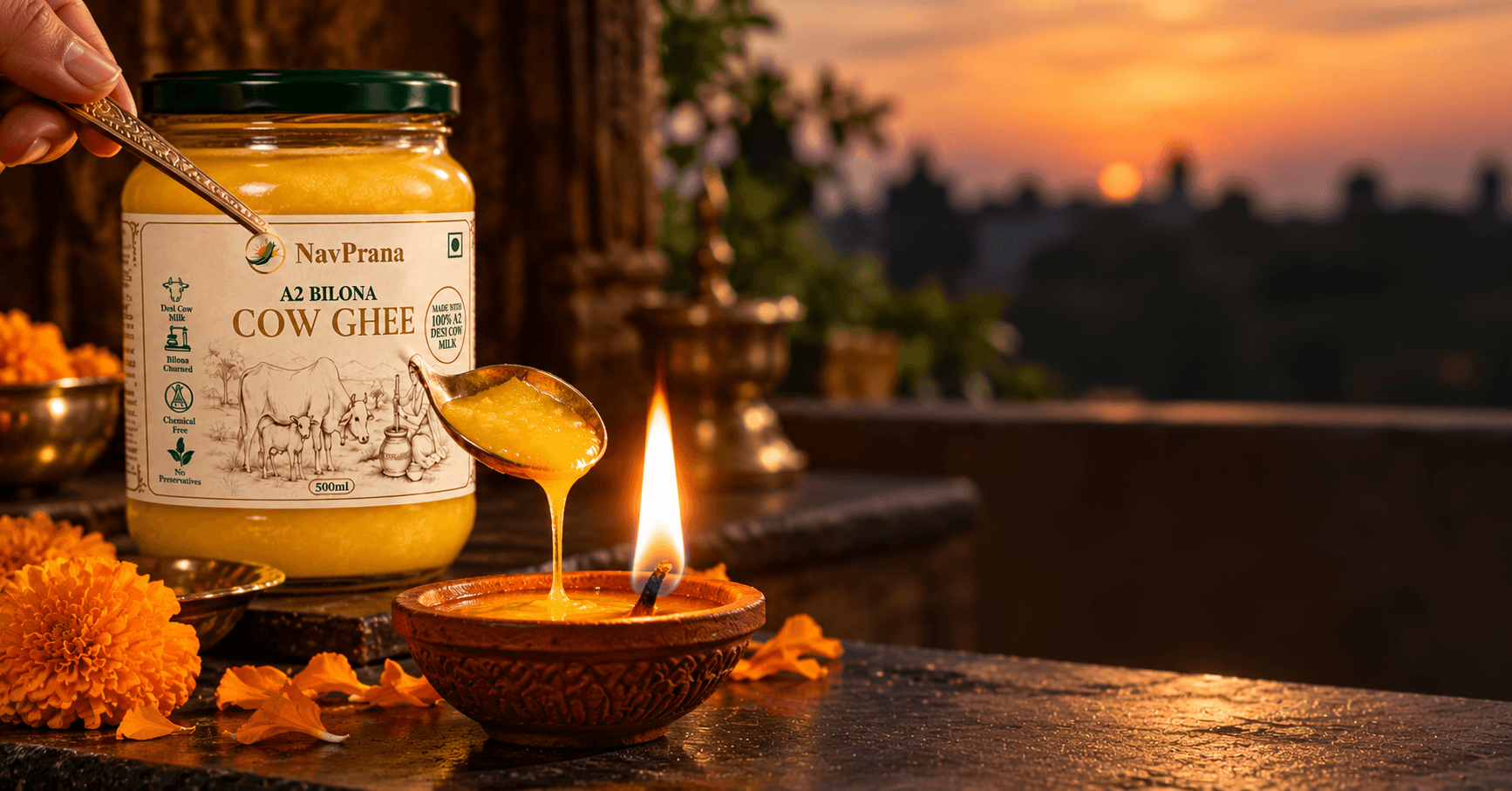
Ghee Diya for Diwali: How to Make It and How Much Ghee You Need
Why does your ghee diya keep going out? How to set a ghee diya so it burns steadily, how much ghee one diya takes, and how much you need for all five nights of Diwali.
 Clean Eating8 min
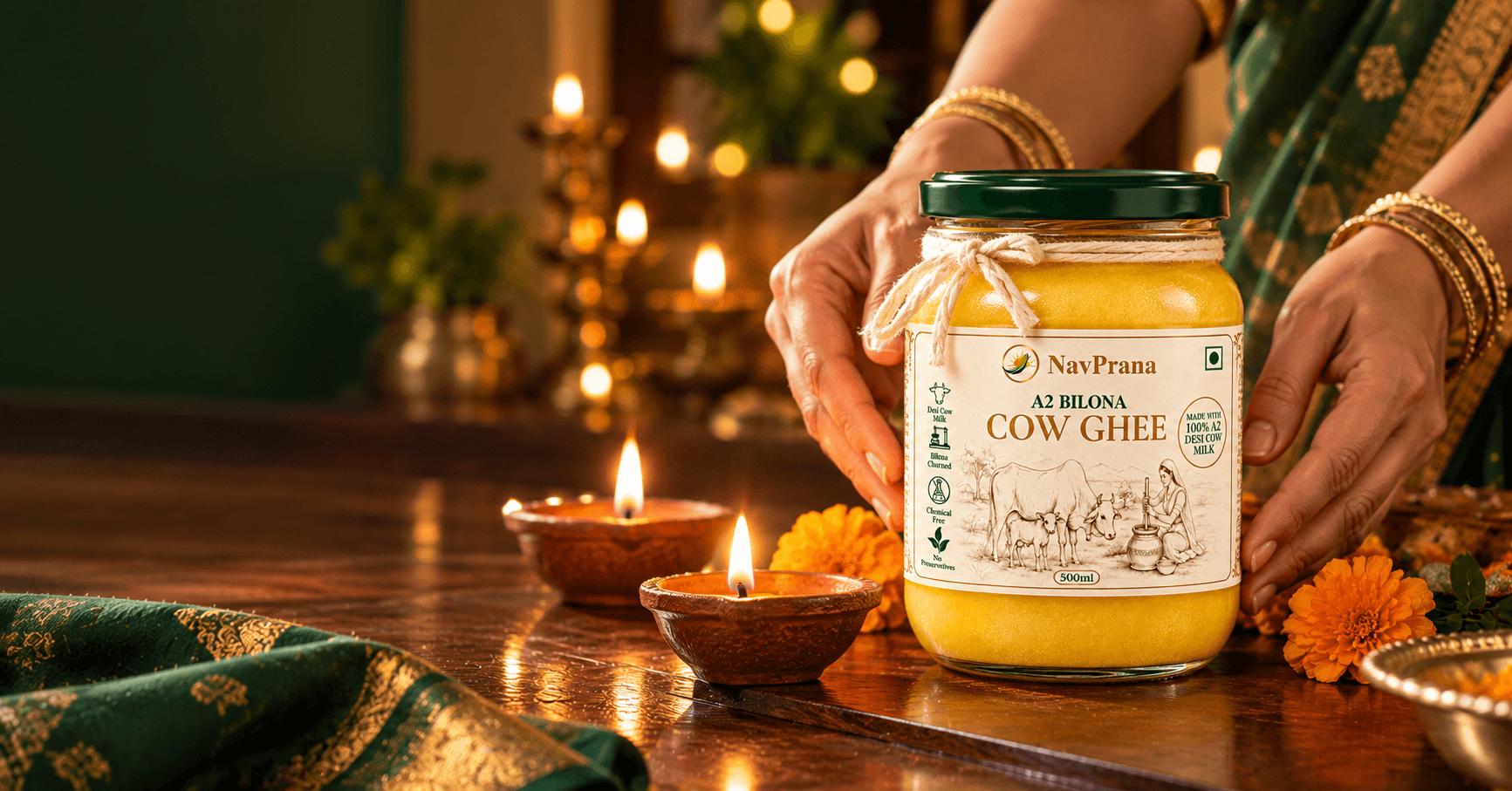
Healthy Diwali Gift Ideas 2026: Give Pure Ghee, Not Another Sweet Box
Tired of gifting sweet boxes nobody finishes? These healthy Diwali gift ideas get used long after the festival, with budget picks from ₹699 and a quick way to check the ghee you gift is real.
 Awareness6 min
असली घी की पहचान कैसे करें: घर के 5 टेस्ट, और वे क्या नहीं पकड़ पाते
असली घी की पहचान के लिए घर के 5 टेस्ट: कौन सा FSSAI का बताया हुआ है, कौन सा सिर्फ तसल्ली देता है, और पक्का जवाब लैब रिपोर्ट में क्या देखकर मिलता है।
From our kitchen and yours
Reels from the unit in Morena, and from people cooking with NavPrana ghee at home.
Join our community of 5000+ health-conscious families