

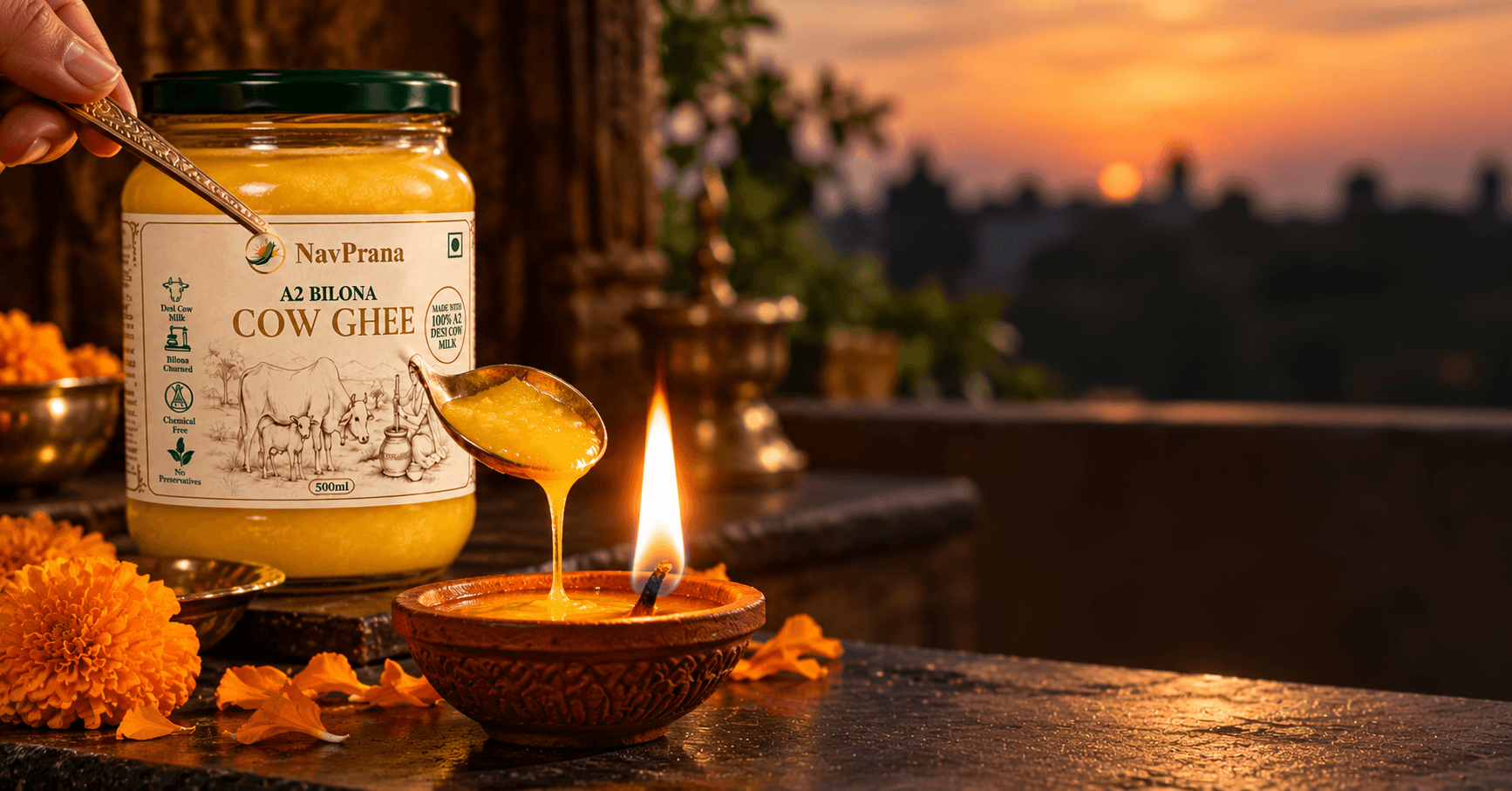
Ghee Diya for Diwali: How to Make It and How Much Ghee You Need
Dhanteras evening. Twenty-one clay diyas on the steps, and within twenty minutes half of them are smoking or out. It is almost never the ghee. It is the diya, the wick, or both. Here is how to set a ghee diya that burns steadily, and how much ghee to keep aside for all five nights.
Quick Answer
Soak new clay diyas in water for a few hours and let them dry, so the clay does not absorb the ghee. Add about 2 teaspoons of melted ghee, lay a cotton wick soaked in ghee with its tip just above the rim, and light it. For five nights of Diwali, plan roughly 10 ml per diya per evening: 11 diyas need about half a litre.
How Much Ghee You Need for Diwali
| Diyas Each Evening | Ghee per Evening | All Five Nights |
|---|---|---|
| 5 | About 50 ml | About 250 ml |
| 11 | About 110 ml | About 550 ml |
| 21 | About 210 ml | About 1 litre |
| 51 | About 510 ml | About 2.5 litres |
Planning figures, based on 2 teaspoons (about 10 ml) per diya per lighting. Diyas vary a lot in size, so fill one of yours, note how much it took, and multiply.
Remember the kitchen too. Diwali week is also laddoo week, so buy for both.
How to Make a Ghee Diya, Step by Step
- Soak the diyas. New clay is thirsty. Soak diyas in water for two to three hours, then let them dry completely. A dry, unsoaked diya pulls ghee into the clay and the flame starves.
- Choose the wick. A round phool batti suits small diyas and burns low and steady. A long lambi batti gives a taller flame and needs a deeper diya.
- Soak the wick in ghee. Dip it in melted ghee for a minute. A dry cotton wick burns itself first and blackens.
- Fill, do not flood. Pour in about 2 teaspoons of melted ghee. Stop below the rim.
- Lay the wick so only the tip, about the width of a grain of rice, sits above the ghee. Then light it.
- Top up carefully. Add a little warm ghee only when it is safe to do so. Never pour liquid into a lit diya or handle hot ghee near an open flame.
Why Does My Ghee Diya Keep Going Out?
- The wick is too long. A long exposed tip smokes and soots. Pinch it back after extinguishing the flame and letting it cool.
- The ghee has set solid. In a cold November evening, buffalo ghee in particular firms up fast. Melt it gently before filling the diya.
- There is water in it. Water from a damp diya or a wet spoon makes the flame spit and die. This is why the soaked diya has to dry fully.
- A draught. Doorways and balconies need a sheltered, stable location away from curtains and other combustible materials.
Which Ghee to Use for a Diya
Cow ghee is the traditional choice for puja and aarti, and most families keep a separate jar of it for the mandir. Buffalo ghee can also burn; it is simply firmer at room temperature, so it may need gentle melting before use in winter.
Read the label on anything sold specifically for lamps. Some packs are marked "not for human consumption". That label means the product should not be used for cooking or eating. Under FSSAI's food product standards, ghee is a milk-fat product, and the ingredient list should reflect that. If you want to check a jar at home, FSSAI's DART guide has simple tests, and our असली घी की पहचान post walks through them.
What a Ghee Diya Will Not Do
You will read online that a ghee lamp purifies the air, kills germs or releases oxygen. There is no good evidence for these claims. Every flame, whether fuelled by ghee or oil, consumes oxygen and releases combustion products. Keep the room ventilated, especially with many diyas lit indoors.
Light a ghee diya because it is the tradition, because it smells of home, and because it looks beautiful. Those are reasons enough.
Keep It Safe
Open flames and festive decorations are a risky mix. Keep diyas away from curtains, paper lanterns and dry flowers, and out of reach of children and pets. Never leave a lit diya unattended. Keep an appropriate fire extinguisher or other suitable fire-safety equipment accessible. Synthetic dupattas and sarees can catch fire quickly, so mind the pallu when you lean over the diyas. NDMA's fire-safety guidance is worth reading before the festival.
The Ghee in Our Jars
We make one ghee and it goes both to the kitchen and to the mandir. Milk from the Chambal Valley near Morena is set into curd overnight, hand-churned to lift the makkhan, and slow-simmered. Nothing is added. The full method is in what is bilona ghee.
Real ghee in a diya smells of ghee. You will notice.
Frequently Asked Questions
How Much Ghee Is Needed for One Diya?
About 2 teaspoons (around 10 ml) for a small clay diya, filled below the rim. Bigger diyas take more, so fill one and measure.
How Long Does a Ghee Diya Burn?
It depends far more on the wick and the diya than on the ghee. A thin phool batti in a small diya burns slowly; a long lambi batti burns faster with a taller flame. Time one of yours on the first evening and plan the rest from it.
Ghee Ka Diya Kaise Jalaye?
Naye mitti ke diye ko 2–3 ghante paani mein bhigo kar poori tarah sukha lijiye. Rui ki batti ko pighle ghee mein dubo kar rakhiye, diye mein lagbhag 2 chammach ghee daaliye, aur batti ki nok bas thodi si bahar rakh kar jalaiye. Diya ko hamesha stable jagah par rakhein aur jalte hue diye mein ghee na daalein.
Can I Use Buffalo Ghee for a Diya?
Yes. It can burn well. Cow ghee is the traditional choice for puja, and buffalo ghee may need gentle melting on cold evenings because it sets firm.
Diye Mein Kitna Ghee Dale?
Chhote diye mein lagbhag 2 chammach (10 ml) kaafi hai. Paanch din ke liye 11 diye jalane hain to lagbhag 550 ml ghee rakhiye.
Get Your Diwali Ghee
For eleven diyas over five nights plus the festive cooking, a 1 litre jar of A2 Desi Cow Bilona Ghee may cover your needs, depending on diya size and cooking quantity. Making laddoo and halwa as well? Add A2 Buffalo Bilona Ghee, and see our guide to the best ghee for sweets. Shipping is free on orders above ₹599, subject to the current shipping policy. Check the latest delivery estimate before ordering.
Safety note: an open flame is a fire risk. Never leave lit diyas unattended, and keep them away from children, pets and anything that burns.