

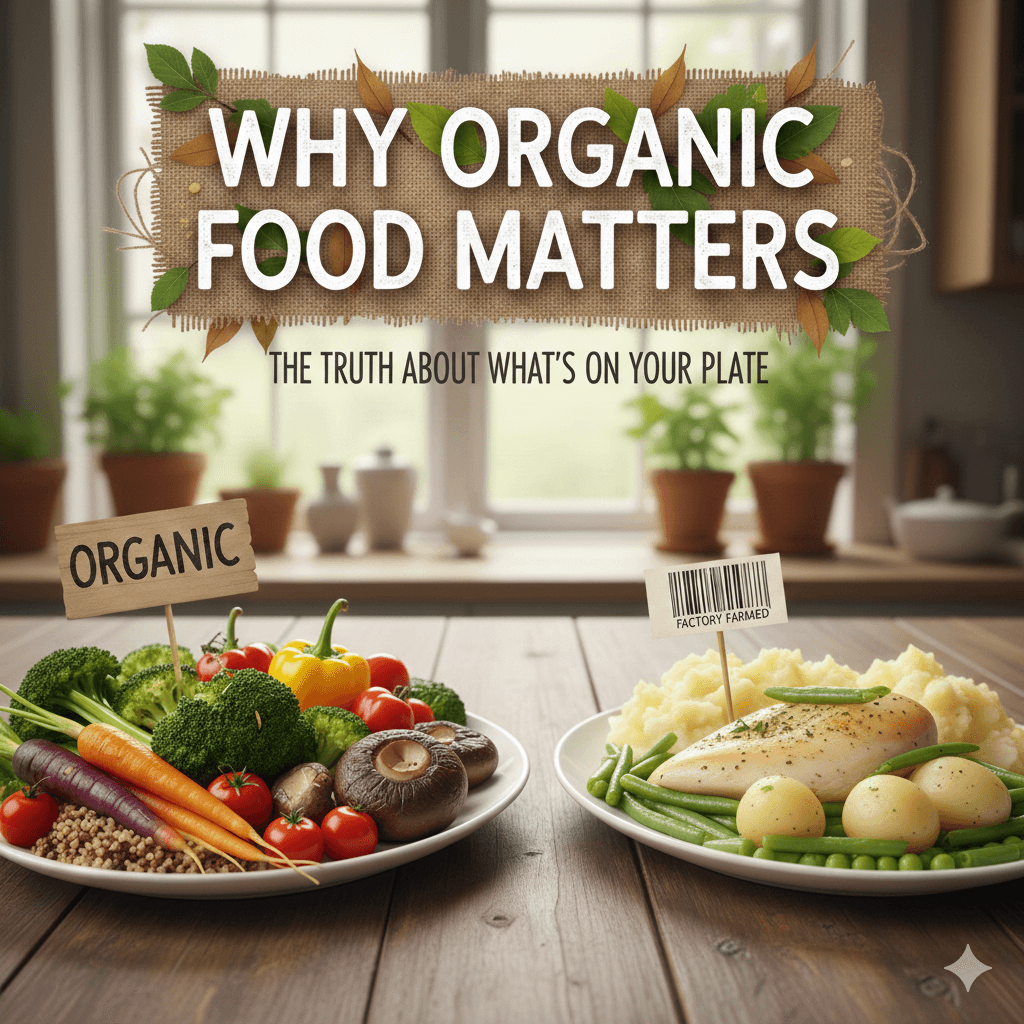
🌱 Introduction: Do You Really Know What’s on Your Plate?
Modern food looks fresh, colorful, and attractive. But behind that perfect shine often lies a mix of chemical pesticides, synthetic fertilizers, artificial preservatives, and genetically modified ingredients.
Over time, these hidden additives may impact your immunity, hormones, digestion, and overall well-being.
Choosing organic food is no longer a trend — it's a conscious decision for long-term health.
🧪 The Hidden Dangers in Conventional Food
1️⃣ Pesticide Residue
Many non-organic crops are sprayed with chemical pesticides to increase yield and prevent insects. Even after washing, traces can remain on fruits and vegetables.
Long-term exposure has been linked to:
- Hormonal imbalance
- Weakened immunity
- Increased health risks
2️⃣ Artificial Preservatives & Additives
Packaged foods often contain:
- Synthetic colors
- Flavor enhancers
- Chemical preservatives
These additives may affect digestion and overall metabolic health when consumed regularly.
3️⃣ Genetically Modified Ingredients (GMOs)
While GMOs aim to improve production, many consumers prefer organic food to avoid genetically modified crops and prioritize natural farming methods.
🌿 What Makes Organic Food Different?
Organic farming avoids:
- Synthetic pesticides
- Chemical fertilizers
- Artificial growth hormones
- Antibiotics in livestock
Instead, it uses:
- Natural compost
- Crop rotation
- Biological pest control
- Sustainable soil practices
This results in food that is cleaner, closer to nature, and often richer in essential nutrients.
❤️ Health Benefits of Switching to Organic
✅ Better for Children
Children are more sensitive to chemical exposure. Organic food reduces their intake of harmful residues.
✅ Supports Immunity
Cleaner food means fewer toxins entering your body — helping your immune system function efficiently.
✅ Improved Digestion
Natural food without artificial additives is easier for the body to process.
✅ Nutrient Density
Many studies suggest organic produce may contain higher antioxidant levels compared to conventionally grown food.
🌍 Organic Food & The Planet
Choosing organic isn’t just about personal health.
Organic farming:
- Protects soil fertility
- Conserves water
- Reduces pollution
- Supports biodiversity
When you choose organic, you're supporting farmers who prioritize sustainability over mass production.
💡 Is Organic Food a Luxury?
Many people think organic food is expensive and only for a premium lifestyle.
But think about this:
You either invest in better food today
OR
You invest in medical bills tomorrow.
Organic food is not a luxury — it’s preventive healthcare.
🏡 Start Small, Start Smart
You don’t need to switch everything overnight.
Begin with:
- Organic ghee
- Cold-pressed oils
- Organic honey
- Chemical-free grains
Gradual changes create lasting impact.
🌾 Final Thoughts
Your body is your home. The food you eat builds your cells, your energy, and your future health.
Next time you shop, ask yourself:
Is this nourishing me — or just filling me?
Choose clean. Choose conscious. Choose organic. 🌱