

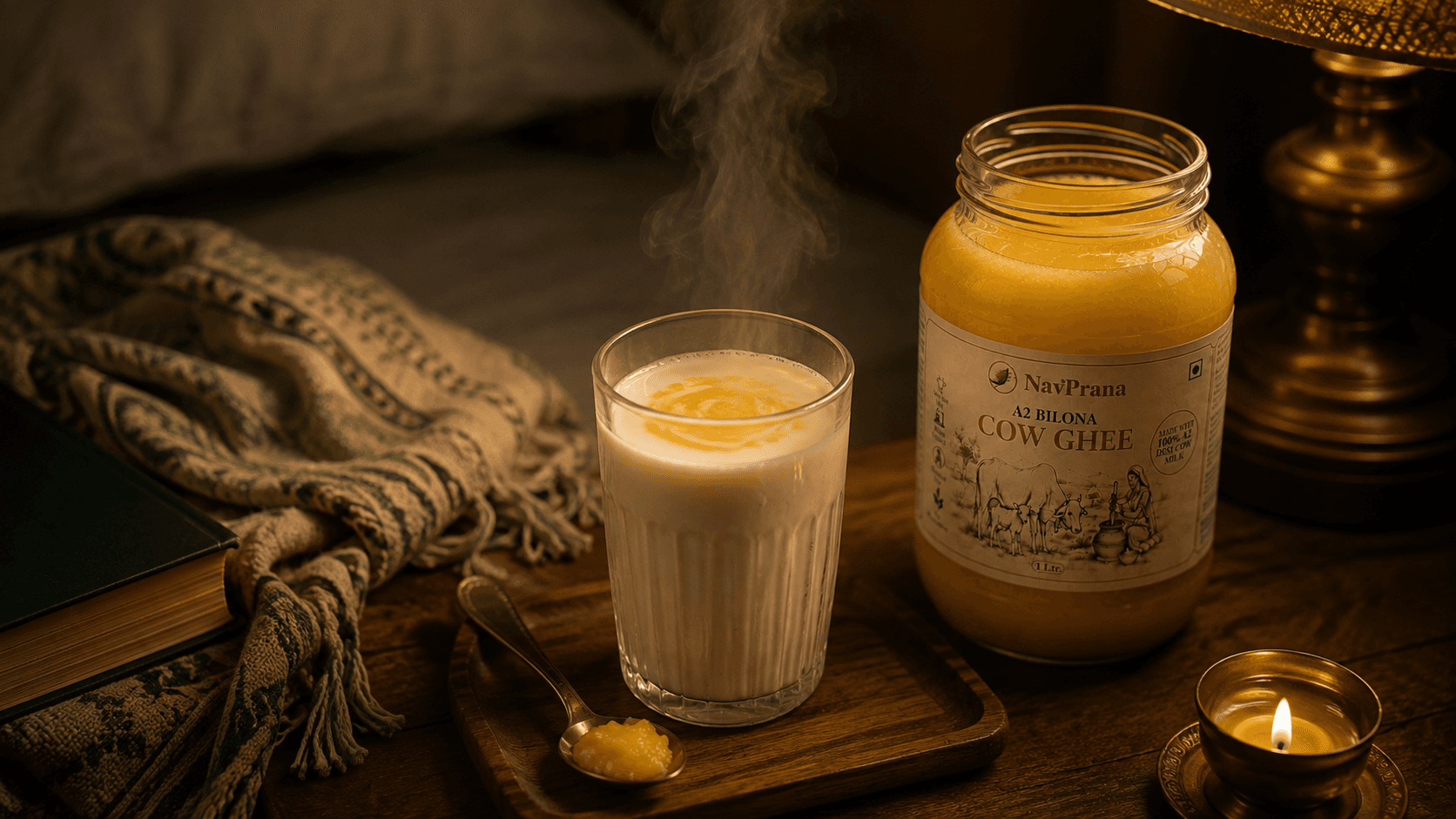
Ghee with Warm Milk at Night: Benefits for Sleep, Digestion & Skin
Long before melatonin gummies and fibre supplements, Indian households had one answer for a restless night or a stubborn morning: a spoon of ghee stirred into warm milk before bed. It is still one of the most quietly effective habits in Ayurveda — provided you make it correctly. Most people get the temperature and the timing wrong.
The Quick Answer
Stir 1 teaspoon of pure A2 bilona ghee into a cup of warm (not boiling) milk and drink it 45–60 minutes before bed, at least two hours after dinner. Used consistently, it may help ease constipation, support relaxation and sleep, and provide dietary fat that can contribute to overall nutrition. Individual results vary.
What It May Help With — and How Long It Can Take
| Potential Benefit | How It May Help | Typical Timeline |
|---|---|---|
| Constipation | Warm milk and dietary fat may support regular bowel movements, particularly when combined with adequate fibre and hydration. | Varies |
| Calmer bedtime routine | A warm drink can become a relaxing part of a consistent nighttime routine. | Days to weeks |
| Skin and lips | Ghee provides dietary fat and fat-soluble vitamins, while overall hydration and nutrition are important for healthy skin. | Varies |
| Joint comfort | Ghee provides dietary fat and calories, although evidence that eating ghee specifically improves joint stiffness is limited. | Varies |
| Healthy weight gain | Ghee and whole milk add calorie-dense nutrition, which can support weight gain when total calorie intake is appropriate. | Weeks to months |
| Bone nutrition | Milk provides calcium and other nutrients important for bone health. Vitamin D status also matters for calcium absorption. | Long term |
These effects are not guaranteed and can vary depending on your overall diet, hydration, sleep routine, activity level and individual health.
How to Make It Correctly
- Heat one cup of milk until it is comfortably warm — steaming, but not boiling.
- Take it off the flame, then stir in 1 teaspoon of ghee until it melts into the milk.
- Sip it slowly rather than drinking it very quickly.
- Time it right: Have it around 45–60 minutes before sleep and preferably at least two hours after dinner. If you feel overly full, try a smaller serving or move it earlier.
That is the whole recipe: two simple ingredients, with the quality and quantity of each being important.
Optional Additions, Depending on Your Preference
- A pinch of turmeric — a traditional addition to warm milk.
- A tiny pinch of nutmeg (jaiphal) — traditionally used in nighttime milk. Keep the amount small.
- Two strands of saffron — commonly added for flavour and aroma.
- A pinch of dry ginger (sonth) — can add warmth and flavour if you find milk heavy.
- Jaggery instead of sugar — if you want sweetness, use it sparingly.
Why Add Ghee to Milk?
Warm milk on its own is a familiar bedtime drink. Adding ghee changes the nutritional profile by adding concentrated dietary fat and calories.
- It adds dietary fat. Ghee is almost entirely milk fat, so even a small amount adds calories and fat to the drink.
- It makes the drink more filling. Adding fat to milk can make the drink more satisfying than milk alone.
- It fits traditional Ayurvedic practice. Ayurveda traditionally uses ghee as a nourishing fat, although traditional claims should not be treated as proven medical effects.
- It can be part of a relaxing routine. A warm drink taken consistently before bed may help create a predictable wind-down ritual.
Morning Ghee in Warm Water or Night Milk — Which Should You Choose?
Both are traditional routines, but they serve different purposes in everyday wellness:
- Ghee in warm water in the morning — some people use this as part of a morning routine. See our guide on what happens after 30 days of the morning ritual.
- Ghee in warm milk at night — works as a nourishing bedtime drink and can be useful for people who want additional calories and fat in their diet.
If you use both routines, remember that ghee is calorie-dense. Include the ghee used in cooking when considering your total daily intake. For personalised dietary advice, speak with a qualified healthcare professional or dietitian.
Who Should Be Careful With It?
- Lactose intolerance — milk contains lactose, so the milk may cause symptoms even though ghee contains very little lactose. Consider a lactose-free milk or another suitable alternative.
- Milk allergy — ghee may still contain trace milk proteins, so people with a diagnosed milk allergy should not assume it is safe.
- Heavy digestion or a late dinner — adding milk and ghee soon after a large meal may feel uncomfortable. Give your dinner time to digest.
- Diabetes — milk contains naturally occurring carbohydrate. Keep the drink unsweetened and account for it within your overall diet.
- High triglycerides, high cholesterol or heart disease — ghee is high in saturated fat. Discuss your overall saturated-fat intake with your doctor or dietitian.
- Acid reflux — a high-fat drink close to bedtime can worsen reflux for some people. If symptoms occur, avoid taking it close to bedtime and speak with a healthcare professional if reflux persists.
The Ritual Is Only as Good as the Ghee
If you choose to make ghee part of your daily routine, quality matters. Look for a product with clear ingredients and appropriate food-safety and quality certifications rather than assuming that every product labelled "ghee" has the same composition or production method.
Traditional Bilona ghee is made by setting milk into curd, churning the curd to obtain makkhan (butter), and then simmering the butter to separate the milk solids from the fat. If you are unsure about your current jar, check it against the signs of fake ghee before making it part of your daily routine.
For night milk, some families prefer Buffalo A2 Bilona Ghee for its richer flavour, while Desi Cow A2 Bilona Ghee offers a lighter-tasting alternative.
Frequently Asked Questions
Does ghee with milk at night cause weight gain?
It can contribute to weight gain if it adds more calories than you need. One teaspoon of ghee adds roughly 45 calories, while a cup of milk adds additional calories depending on the type of milk used. If you are trying to gain weight, this combination can be a convenient way to increase calorie intake. If you are trying to lose weight, include those calories in your daily total.
How long does it take to relieve constipation?
There is no guaranteed timeline. Some people may find that a warm drink and additional dietary fat help their bowel routine, but persistent constipation is usually better addressed through adequate fluids, fibre, physical activity and an overall balanced diet. If constipation continues or is accompanied by pain, bleeding or unexplained weight loss, seek medical advice.
Can I use cow ghee instead of buffalo ghee?
Yes. Both can be used in warm milk. The main differences are flavour, texture and nutritional composition. Choose according to your taste, dietary needs and overall fat intake. Read our cow ghee vs buffalo ghee comparison.
Can children have ghee in milk at night?
Children can consume ghee and milk as part of an age-appropriate balanced diet, but the appropriate amount depends on age and overall nutrition. For infants, follow your paediatrician's feeding guidance rather than using a general dosage. See our guide to ghee for babies.
Is it safe during pregnancy?
Ghee and pasteurised milk can be part of a balanced pregnancy diet for most people, but there is no need to consume them specifically as a bedtime remedy. If you have gestational diabetes, significant reflux or another pregnancy-related condition, follow your healthcare professional's dietary advice.
Will it cause a cold or cough?
There is no good evidence that eating ghee or drinking milk directly causes a cold. However, milk can temporarily make some people feel that their throat has more coating or mucus. If warm milk makes your congestion or reflux feel worse, choose another bedtime drink.
Make Tonight the First One
If you enjoy milk and tolerate dairy well, a cup of warm milk with a small amount of ghee can be a simple and nourishing nighttime ritual. Start with 1 teaspoon of ghee, avoid adding unnecessary sugar, and pay attention to how your body responds over the following week.
- Rich and traditional → Buffalo A2 Bilona Ghee (500 ml)
- Lighter option → Desi Cow A2 Bilona Ghee (500 ml)
Hand-churned in small batches from grass-fed A2 milk in the Chambal valley and FSSAI certified. Shop the collection → Free shipping on orders above ₹999.
This article is for general wellness information only and is not medical advice. If you have a medical condition, take medication, are pregnant, or have specific dietary restrictions, consult your doctor or a qualified dietitian before making significant dietary changes.